

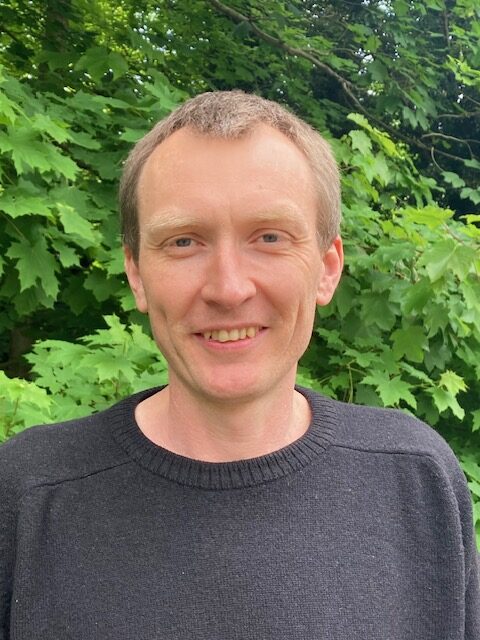
Para Fergus O’Leary (1987–2026),
in memoriam. Hijo, padre, esposo,
amigo, católico, militar,
pero, sobre todo, a mí, hermano.
Mi hermano Fergus comenzó a correr campo traviesa en la secundaria, bajo la dirección de un exmarine que dirigía su equipo con el rigor un tanto desatinado por el que es conocido ese cuerpo militar y que de hecho cabía muy bien en el colegio jesuita en el que estudiamos. Entre semana, al acabar las clases, recorrían las calles del barrio Bellaire de Houston, animados y perseguidos por los ladridos del entrenador, pero los sábados viajaban por todo el sudoeste de Texas, dormitando la madrugada hasta que se paraba el bus en algún parqueadero anónimo, se bajaban y se echaban a correr.
Me lo imagino como era entonces – absurdamente joven, pero distinguible ya por su sonrisa pícara y su nariz aguileña – sintiendo con alegría cómo se estiraban y aflojaban los poderosos músculos de sus piernas, olfateando el aire fresco de la mañana y deleitándose en la libertad y el desafío de la carrera de larga distancia. No dudo que sintiera mi hermano la presencia de Dios en aquellas giras, encontrando en el silencio y la simple tarea de seguir avanzando una forma de orar. (En esos días se debatían su vida El Señor y una joven texana de origen italiana e indio americano. Resultado: empate. Mi cuñada se quedó con su cuerpo y Él con su alma. Compartían su corazón, aunque más tarde ambos les tuvieron que ceder una parte a sus tres hijos.) Puede parecer exagerado conectar el deporte con lo divino, pero los juegos olímpicos antiguos se celebraban en honor de Zeus, el rey de los dioses, y en su primera época eran de carácter puramente religioso.
Sin duda, el ideal atlético de los griegos y su entrenamiento en las gymnasía les servía además como entrenamiento para la guerra. Así fue para Fergus, quien al graduarse del colegio ingresó en el ejército britanico, llegando al rango de mayor. Fue una carrera que realizó otro matiz etimológico de la palabra deporte, el destierro, pues lo llevó a Alemania, Afganistán, España, Turquía y de regreso a Colombia – donde vivimos de niños y aprendimos a jugar al fútbol y hablar el español – para formar parte del equipo de la ONU supervisando el desmantelamiento de los arsenales de las FARC tras firmarse el Acuerdo de La Habana en 2016.
Me pregunto ahora si recordara alguna vez, en las montañas de Asia o en los llanos americanos, aquellas mañanas texanas de aire libre y gozo físico y espiritual, y me gustaría hablarlo con él, pero ya no hay manera. Su carrera, como su vida, terminó el 24 de enero de 2026, cuando lo venció el cáncer que le asediaba desde hace por lo menos seis años, pero ante el cual nunca se rindió.
A pesar de su muerte demasiado temprana – tenía apenas 38 años – no dejo de pensar en su vida como una de esas carreras de larga distancia: llena de libertad y desafío. Disfrutó, viajó, trabajó, luchó, leyó, escribió, amó y se dedicó, como él mismo explica en la carta testamentaria dirigida a sus hijos, «a levantarme cada mañana y pasar el día haciendo algo que le es de servicio al prójimo», pues ninguna otra cosa «me ha proporcionado siquiera la mitad de la honda satisfacción y alegría de una vida de servicio»; llena también del impulso a seguir adelante, a pesar de todo.
A pesar, en especial, de la enfermedad que le costó el brazo derecho y le dificultó muchas actividades que le encantaban, que le invadió primero a los pulmones – seguía corriendo incluso cuando había comenzado a sufrir colapsos pulmonares– y luego, a todo ese cuerpo que en la juventud se había desplazado por tantas millas de carretera con tanta facilidad y tanto placer. Ni eso lo pudo detener. Mi hermanito siguió hasta al final y llegó a la meta como el legendario Filípides a Atenas tras cumplir el primer maratón: muerto, pero victorioso.
¿Acaso es posible? ¿Triunfar y fallecer a la vez? ¿Dejarse la vida, pero llevarse los laureles? Difícilmente podemos hablar de la victoria en la vida porque el lenguaje más sencillo nos traiciona: la vida no se puede ganar, porque nos es regalada, y como no hay ni ha habido ser mortal que no la pierda, se tendría que decir que fracasamos todos. Pero las palabras que usamos para describir la realidad tienen tan poco que ver con ella como el informe del periódico dominical con el partido del sábado o como este breve homenaje a mi hermano con el hombre que fue. Sudor, sangre, risa, llanto, júbilo, desespero, triunfo, derrota: todos son cosa de carne y hueso y no se dejan delimitar. Claro que se puede morir victorioso, porque la vida abarca toda posibilidad.
Es más, hay que tener en cuenta que en la vida, como en la carrera de larga distancia, el contrario no es otro – ni el prójimo, ni el suelo, ni la distancia, ni la muerte – sino uno mismo. La victoria no es la del que llegue primero al final, sino del que pueda superar el reto de sí mismo – aquella vocecita insidiosa que pide agua, un descanso, que insiste que no se puede y que no vale la pena el intento – y como dice Kipling (en uno de los poemas favoritos de mi hermano), «fill the unforgiving minute with sixty seconds’ worth of distance run». Es decir, el campeón es el que no echa a perder ni un segundo, a pesar de lo duro que es la carrera, el que no se permite reservas, el que se las gasta todas y se entrega enteramente a seguir adelante, a correr. Fergus, como cualquiera, experimentó el éxito y el fracaso, ganó y perdió, pero como pocos que he conocido, ni vacilaba ni se frenaba y le sacó de sus demasiados pocos años toda la vida que en ellos había. Ganada o perdida la carrera o el partido, el campeón es el que lo deja todo, pero todo en el campo. De aquellos héroes era mi hermanito.
.
.
A Long-Distance Race
.
For Fergus O’Leary (1987–2026),
in memoriam. Son, father, husband, friend,
catholic and soldier, but above all, to me,
brother.
.
My brother, Fergus, started running cross-country in high school, under the direction of a former marine who coached his team with the slightly crazed discipline for which that branch is known and which actually fit in quite well at the Jesuit prep school we attended. During the week, after classes, they would run through Houston’s Bellaire neighbourhood, encouraged and pursued by their coach’s shouts. On Saturdays they travelled all over southwest Texas, sleeping through the early morning until the bus stopped in some anonymous parking lot and they all piled off and began to run.
I imagine him as he was then – absurdly young, but already recognizable by his roguish smile and his aquiline nose – enjoying the flexing of his powerful leg muscles, sniffing the fresh morning air and delighting in the freedom and challenge of a long distance race. I have no doubt that my brother felt the presence of God on those runs, finding in the silence and the simple task of continuing a form of prayer. (In those days his life was being contested by the Lord and by a young Texan woman of Italian and Native American heritage. The result: a tie. My sister-in-law got his body and the Lord his soul. They shared his heart, although later they each had to cede a part to his three children.) It might seem an exaggeration to connect sport with the divine, but the ancient Olympic Games were celebrated in honor of Zeus, king of the gods, and in their first incarnation were purely religious in character.
No doubt their athletic ideal and training in the gymnasia served to prepare the ancient Greeks for war. It was the same with Fergus, who on finishing school joined the British Army, ascending eventually to the rank of major. His was a career that realized another etymological facet of sport (from the Old French desporter, to carry away) as it took him to Germany, Afghanistan, Spain, Turkey and back to Colombia – where we lived as children and learned to play football and speak Spanish – to form part of the UN team supervising the disarmament of the FARC after the signing of the peace agreement in Havana in 2016.
I wonder now whether, in the mountains of Asia or on the plains of South America, he ever recalled those Texan mornings of fresh air and physical and spiritual joy, and I would love to ask him, but I can’t. His career came to an end along with his life, on the 24th of January, 2026, when he finally succumbed to the cancer that had laid siege to his body for at least six years, but to which he never surrendered.
Despite his too-early death – he was only 38 – his life reminds me of one of those long-distance races: full of freedom and challenge. He enjoyed himself, travelled, worked, fought, read, wrote, loved and dedicated himself, as he explained in a final letter to his children, “to awake every morning and spend my day doing something of service to a fellow human being” for nothing else “has provided me with anywhere near the deep satisfaction and joy as a life of service.” Full, too, of the impulse to keep going, in spite of everything.
In spite, especially, of the illness that cost him his right arm and made it difficult to do so many of the things he loved; that first invaded his lungs – he kept running even when they had started to collapse! – then the whole of that body that in his youth had run down so many miles with such ease and pleasure. Not even that was able to stop him. My little brother kept going until the end, arriving at the finish line as the legendary Pheidippides did in Athens after running the first marathon: dead, but victorious.
Is such a thing even possible? To both perish and prevail? To leave your life, but take with you the victory laurels? It is difficult to speak about victory in life, because the simplest language betrays us: life cannot be won because it is given to us, and as there has never been a mortal being that has not lost it in the end, we must all be counted losers. But the words we use to describe reality have as little to do with it as the report in Sunday’s paper has with Saturday’s match or this brief tribute to my brother with the man he was. Sweat, blood, laughter, tears, joy, despair, victory, defeat – all are things of flesh and bone and cannot be delimited. Of course it is possible to die victorious, because life encompasses every possibility.
What is more, we must bear in mind that in life, as in a long-distance race, the opponent is not some other – neither a person, nor the ground, nor the distance, nor even death – but oneself. Victory belongs not to he who finishes first, but to he who can meet the challenge of himself: the insidious little voice that calls for water, or a rest, or who insists that it’s impossible and that the effort is in vain. Victory belongs to he who can, as Kipling says in one of my brother’s favourite poems, “fill the unforgiving minute with sixty seconds’ worth of distance run”. Which is to say that a champion is he who wastes not a second, no matter how hard the race, he who holds nothing in reserve, who spends every ounce of everything he has and gives himself entirely to running on. Like all of us, Fergus experienced success and failure, he won and he lost, but like few people I have known, he neither hesitated nor held back, and he squeezed from his too-few years every drop of life that was in them. A champion is he who leaves absolutely everything he has in the field or on the pitch, regardless of whether the race or the match be won or lost. My brother was such a champion.
Eamonn O’Leary es de origen irlandés e inglés. Se crió en Colombia y los EE.UU. Ha vivido en los EE.UU., Bulgaria, Alemania e Irlanda. Es profesor de secundaria y estudiante en The University of Texas, Permian Basin.


